
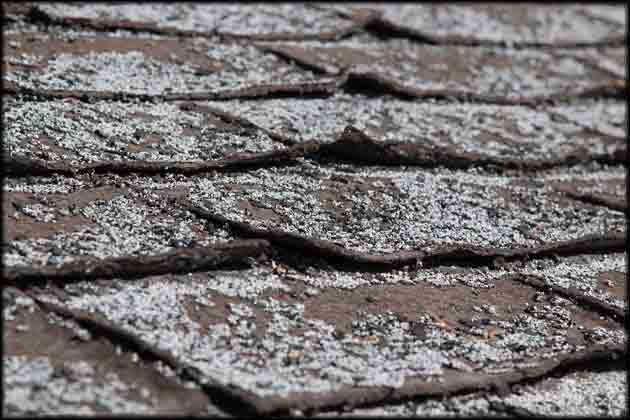
SHINGLE “BURN OUT” LEADS TO LEAKAGE
Have you ever wondered why hip and ridge fiberglass shingles burnout faster along the ridge of the roof than shingles made from the same material on the rest of the roof? The explanation is less obvious than you might think. The fiberglass shingles at the roofs’ peak, its ridgeline, are being actively destroyed, even during cold winter months, from heat and moisture build-up inside an unventilated or poorly vented attic.
As we all know, heat rises. In this case, to the highest point of the attic, right below the ridgeline. And it is here that the heat attempts to escape particularly in today’s more tightly constructed homes. The attic in earlier architectural styles was draftier and less energy-efficient than now. Unlike summer’s hot sun, winter provides a different source of destructive heat. Heat from the homes interior rises into the attic, taking with it water vapor, the unnoticeable consequence of such everyday water-related activities as bathing, washing dishes or doing the laundry.
When an inadequately ventilated attic allows this warm, moist air to accumulate, deterioration of fiberglass shingles and even of wooden roof structures is the inevitable result. If winters’ less obvious destructive effects are then added to pre-existing burned-out fiberglass shingles along the ridgeline, your customer can expect either a long, cold winter or higher heating bills than necessary.
Here’s why. After warm, moist air rises into the attic, it cools, releasing its moisture as condensation, which settles into attic insulation. It doesn’t take much moisture to impair the efficiency of attic insulation. In fact, with only a 1% moisture content, insulation loses 36% of its R-value. During winter decreased R-value means increased heat loss from the home. Because the function of attic insulation in winter months is to help keep the homes’ interior warm and comfortable, heat that escapes through insulation is gone forever. Attracted to the cooler roof sheathing and then to the even colder outside air, heat never re-enters the homes’ interior… a chilly prediction for the owners of unventilated or inadequately vented attics.
High heat, whether from outside or inside, will bake the oils right out of petroleum-based shingles, shortening the warranty period of products intended to last many years longer than they actually do. There’s no way to prevent exposure to the natural forces of sun, wind, rain or snow but you can vastly reduce premature aging of fiberglass shingles by providing good attic ventilation on your customers roof, whether new construction or retrofit.
According to university studies, ventilation is most efficient at the ridgeline where heat normally collects. Old-fashioned turbine vents, for instance, are not only less efficient because of where they’re installed but suffer from homeowner dissatisfaction as well. Owners of turbine vented roofs often regard their whirlybirds as necessary evils, but also complain of the noise, leakage and stark unattractiveness associated with using them. Many people, though, including a number of roofing contractors, still don’t realize how much damage attic heat can inflict on an fiberglass shingle roof, a fact that has not been lost on regulatory agencies and corporate executives. This is why the Ontario Building Code requires adequate attic ventilation and so do the warranties of every manufacturer of fiberglass shingles. In other words, if you install an fiberglass shingle roof without the question of attic ventilation being asked or answered you may as well throw out the manufacturer’s warranty along with the shingle wrappers.
Another issue with turbines is they allow water and snow to enter your attic. I personally had to remove my turbine and scoop out over a foot of snow below my turbine. When there is no wind the turbine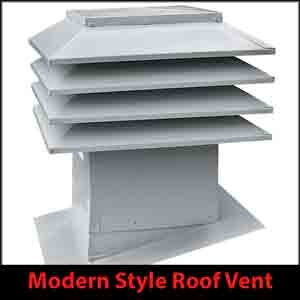 does not spin allowing what ever is falling to enter your attic. The majority of roofers in Orillia are now usng the Vmax or similar type of roof vent which does not permit moisture or snow to enter the attic. When ever I see a newly shingled roof with new turbines put on it just makes me smile, as I know either the roofer is not very knowledgeable or they just wanted to save money.
Signs of Poor Ventilation
If your roof is showing external signs of damage or decay, there has most likely been some ventilation and moisture management problems occurring for quite some time. If shingles are falling off, decking is soft and rotted from exposure to the elements, or soffit and fascia are falling off or deteriorating, these can often be signs of moisture from within the home causing significant structural issues and damage to the home’s exterior.
This is why visible exterior damage from moisture is one of the signs you don’t have proper roof ventilation.
Moisture in the Attic
If this moisture build-up gets severe enough, it can lead to permanent roof and even interior ceiling damage that can be costly to remediate. It also can lead to rot, mildew, and even the growth of dangerous types of mold. Just the air leaking by a faulty seal on your attic hatch will allow mould to form on the support structure around the hatch entrance.
Seniors Beware
I have seen many homes where shoddy contractors have done very poor work simply because they know the home owners are too old to be climbing into an attic to inspect the work they have done. Research any contractor online or checking references prior to signing any contract. Tell the contractor that you will be having a third party inspect the quality of workmanship prior to paying. Just knowing that his work will be inspected will most likely ensure that he or his crew will do a better job. If you can’t find a relative or friend to inspect your contractors work you can contact the Orillia Home Inspector to arrange for an inspection of work.
In the long run, a cooler, drier attic helps preserve the life of fiberglass shingle roofs but what about short term benefits? Of these, the most important is customer comfort. Not only is venting through the ridge the natural way to ventilate the attic, it is also the most cost-effective. Your customer’s home stays warmer during the winter so heaters and furnaces aren’t turned on as soon in the day or left on for as long, resulting in lower utility bills. But what about curb appeal. Sales figures confirm the popularity of texture and dimensionality among homeowners who select designer premium shingle roofs, a feature no less sought-after on the hips and ridges of the roof. But since none of the dimensional hip and ridge shingles also vent the attic space, they’re especially vulnerable to early burnout.
To satisfy the attic ventilation requirements set by the Ontario Building Code, your customer’s roof should be installed in accordance with the following requirements:
9.19.1.2. vent Requirements
(1) Except as provided in Sentence (2), the unobstructed vent area shall be not less than 1/300 of the insulated ceiling area.
(2) Where the roof slope is less than 1 in 6 or in roofs that are constructed with roof joists, the unobstructed vent area shall be not less than 1/150 of the insulated ceiling area.
(3) Required vents are permitted to be roof type, eave type, gable-end type or any combination of them, and shall be distributed,
(a) uniformly on opposite sides of thebuilding,
(b) with not less than 25% of the required openings openings located at the top of the space, and
(c) with not less than 25% of the required openings openings located at the bottom of the space.

For more information on Attic or Roof Inspections call Roger at 705-795-8255
Send Roger an Email roger@orilliahomeinspector.com
We also offer Asbestos Testing – Air Quality Testing – WETT Inspections and Free Thermal Imaging with every Inspection
All our Inspection Services